Posts

Machine Learning Operations (MLOps) Specialization || Online Training || Visualpath

Image
Mode of Training: Online Contact us: +91 9989971070. Join us on WhatsApp: https://www.whatsapp.com/catalog/919989971070/ Visit: youtube.com/c/visualpath Do subscribe to the Visualpath channel & get regular updates on further courses.

The Evolving Landscape of MLOps: Streamlining Machine Learning Pipelines in 2024

Image
  Machine learning  (ML) has become a transformative force across industries, but its true potential can only be unlocked through effective deployment and management. This is where  MLOps , the practice of merging machine learning with operations, comes into play. In 2024, MLOps continues to evolve, offering organizations a robust and efficient framework for building, deploying, and maintaining production-ready ML models. The Need for MLOps The journey of an ML model, from conception to real-world impact, is complex. Traditional software development methodologies often fall short when dealing with the iterative nature of ML. Data scientists grapple with version control, experiment tracking, and ensuring data quality throughout the model lifecycle. Additionally, deploying and monitoring models in production requires expertise in infrastructure management and performance optimization. MLOps bridges this gap by establishing a standardized workflow that streamlines the entire...

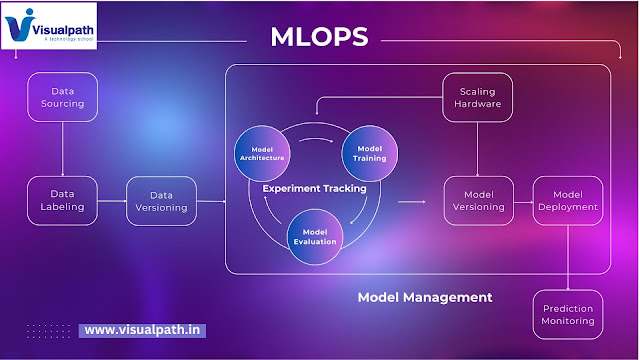
Understanding the Workflow of Machine Learning operations

Image
  Machine learning  (ML) has become a transformative force across industries, enabling data-driven decision-making and automation. However, building a successful ML model is just one piece of the puzzle. Effectively deploying, managing, and monitoring these models in production requires a robust workflow – enter  MLOps   (Machine Learning Operations). What is MLOps? MLOps bridges the gap between data science and software engineering, fostering collaboration and streamlining the entire ML lifecycle. It encompasses a set of practices that automate the development, deployment, and monitoring of ML models. By implementing MLOps, organizations can ensure: Reproducibility:  MLOps ensures models can be consistently rebuilt and deployed, reducing errors and facilitating collaboration. Scalability:  It enables efficient management and deployment of models at scale, crucial for real-world applications. Governance:  MLOps establishes frameworks for mode...

ML: A Lifecycle Management System for Machine Learning

Image
  Machine learning  (ML) has become a transformative force across industries, enabling intelligent systems for tasks ranging from fraud detection to medical diagnosis. However, building and deploying  successful  ML models involves a complex lifecycle with multiple stages. This article explores ML, a lifecycle management system designed to streamline this process, fostering efficient and robust ML development. The Intricacies of the ML Lifecycle Traditionally, the ML lifecycle can be broken down into six key steps: 1.       Planning:  Defining the business problem and desired outcomes for the ML project. 2.       Data Preparation:  Gathering, cleaning, and transforming data to ensure model quality. 3.       Model Engineering:  Selecting algorithms, training models, and optimizing hyperparameters. 4.       Model Evaluation:  Assessing model performan...

MLOps: A Comprehensive Guide to Advantages, Instances, and Resources for 2024

Image
  Machine learning  (ML) has become an indispensable tool across various industries, revolutionizing how we approach problem-solving and decision-making. However, the journey from  developing  an ML model to deploying it in production and ensuring its ongoing performance can be complex. This is where  MLOps  comes in. Understanding MLOps MLOps (Machine Learning Operations) is a discipline that encompasses the tools, processes, and cultural practices required to efficiently manage the lifecycle of ML models, from development and testing to deployment and monitoring in production. In essence, it aims to bridge the gap between data science teams, who are responsible for building models, and IT operations teams, who are responsible for deploying and maintaining them. Benefits of MLOps ·           Increased Efficiency and Productivity:  MLOps automates manual tasks, reduces errors, and streamlines workflows, allo...